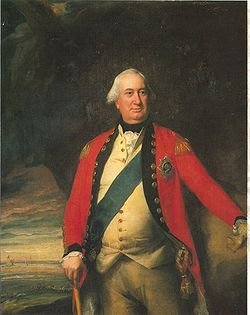
The Enduring Legacy of Cornwallis: From Colonial Foundations to Modern Remembrance
Introduction
Nestled along the serene shores of the Annapolis Basin in Nova Scotia, the story of HMCS Cornwallis and CFB Cornwallis is one of transformation, resilience, and profound impact on Canada’s military heritage. Over more than five decades, this site trained over 500,000 service members from all branches of the Canadian Armed Forces, forging the skills and spirit that defended a nation through war and peace. Named in honor of Edward Cornwallis, the founder of Halifax, the base’s history begins in the colonial era but finds its true purpose in the crucible of the 20th century. Today, as Cornwallis Park, it stands as a vibrant community and living testament to that legacy. This article traces its journey from 18th-century origins to the present day, celebrating the contributions of those who served while reflecting on its evolving role.
Edward Cornwallis: The Man Behind the Name
A Colonial Founder and Military Officer
The naming of HMCS Cornwallis draws directly from Edward Cornwallis (1713–1776), a prominent British military officer and colonial administrator whose legacy is deeply intertwined with Nova Scotia’s early history. Born into the aristocratic Cornwallis family—known for generations of naval and military service—Edward was the younger brother of Charles Cornwallis, the infamous British general from the American Revolutionary War, and nephew to Admiral Sir Robert Cornwallis. Edward himself rose through the ranks, serving in the War of the Austrian Succession and earning a reputation as a disciplined leader.
In 1749, at the age of 36, Cornwallis was appointed the first governor of Nova Scotia by the British Crown, tasked with countering French influence in the region following the capture of Louisbourg. He arrived in Chebucto Bay (present-day Halifax Harbour) aboard the sloop Sphinx on June 21, commanding a fleet of 13 transports carrying over 2,500 settlers. Under his leadership, Halifax was founded on June 21, 1749, as a strategic British stronghold against French and Mi’kmaq forces. The settlement’s grid layout, fortifications, and rapid growth—reaching 4,000 residents by 1752—solidified Cornwallis’s place in Canadian history as the “Founder of Halifax.”
Cornwallis’s tenure, however, was not without controversy. His administration issued a notorious scalp bounty in 1749, offering rewards for Mi’kmaq prisoners and scalps amid escalating conflicts, a policy that has drawn modern criticism for its role in colonial violence. He resigned in 1752 due to health issues and political frustrations, returning to England to serve in Parliament and as Governor of Gibraltar until his death in 1776. Despite these complexities, his foundational contributions to Nova Scotia’s settlement endure, and the naval base bearing his name honors this colonial link to Halifax, the cradle of Canadian naval power.
The Birth of HMCS Cornwallis (1942–1943)
Wartime Necessity and Rapid Construction
As the shadows of World War II lengthened over the Atlantic, Canada’s Royal Canadian Navy (RCN) faced unprecedented expansion. The Battle of the Atlantic demanded a surge in trained sailors, but Halifax’s HMCS Stadacona—handling both operations and training—struggled under the strain. In response, a 1942 reorganization birthed HMCS Cornwallis on May 1, initially at HMC Dockyard Halifax, named to evoke the naval heritage tied to Edward Cornwallis.
The search for a dedicated site led to the Annapolis Basin, selected for its deep-water access despite initial considerations of Shelburne. Construction erupted in June 1942 on a former apple orchard spanning Clementsport and Deep Brook, with a $15 million budget fueling the erection of 80 buildings designed by architect Cecil Burgess. By April 14, 1943, the base was commissioned, welcoming its first 2,500 personnel via train from Halifax. Under the motto “Learn to Serve,” it became the RCN’s premier recruit training hub.
Wartime Crucible: World War II and Peak Operations (1943–1945)
Forging Sailors for the Battle of the Atlantic
HMCS Cornwallis swiftly scaled to over 11,000 personnel, eclipsing all other Commonwealth naval training facilities. Recruits endured rigorous 6–8-week programs in seamanship, gunnery, anti-submarine tactics, and self-defense, often accelerated by wartime urgency. Specialized schools emerged for ASDIC (sonar), engine rooms, and chemical warfare, while vessels like HMCS Annapolis and Acadia provided hands-on sea training.
Women of the Women’s Royal Canadian Naval Service (Wrens) broke barriers here, training in communications and administration after basics at HMCS Conestoga. Economically, the base revitalized Annapolis and Digby Counties, spurring rail expansions and local commerce. As victory loomed in 1945, it pivoted to a Discharge Transit Centre, aiding thousands of sailors’ return to civilian life before decommissioning on February 28, 1946.
Post-War Transition and Reactivation (1946–1949)
From Dormancy to Cold War Readiness
Deemed surplus, the base lay quiet until the Cold War’s chill revived it. NATO’s 1948 formation and the Korean War’s outbreak in 1950 necessitated rapid naval growth. Renovations commenced in September 1948, recommissioning HMCS Cornwallis on May 1, 1949, for 800 recruits—soon doubling amid Korea’s demands. Wrens resumed training in 1951, alongside reservist programs, solidifying its role as a cornerstone of peacetime preparedness.
Cold War Expansion and the Korean Conflict (1950s–1960s)
A Hub for Naval Excellence
The 1950s saw HMCS Cornwallis evolve into a multifaceted center, hosting summer cadet programs and advanced courses in Morse code and radio via its Fleet School division. It trained sailors for NATO commitments, emphasizing anti-submarine warfare amid Soviet submarine threats. By the 1960s, as integration loomed, it prepared for broader service, training over 1,600 annually and contributing to Canada’s global defense posture.
Unification: Becoming CFB Cornwallis (1968–1994)
A Unified Forces Training Ground
The February 1, 1968, unification of Canada’s military branches renamed it Canadian Forces Base (CFB) Cornwallis, making it the English-language arm of the Canadian Forces Recruit School (CFRS). Now serving Navy, Army, and Air Force recruits, it delivered adaptable basic training, with French counterparts at CFB St-Jean. Through the 1970s–1980s, it honed skills for peacekeeping and Cold War contingencies, graduating countless personnel until post-Soviet budget cuts deemed it surplus in 1994. The final class, 9426, marched out on August 18, 1994.
Closure and the Dawn of Cornwallis Park (1994–Present)
Redevelopment and Community Renewal
Decommissioned in May 1995, the 3,000-acre site transferred to Nova Scotia, birthing the Cornwallis Park Development Authority. Repurposed as Cornwallis Park—a community of 488 residents (2021 census)—it now features senior housing, an industrial park with call centers and manufacturing, and the Cornwallis Military Museum preserving artifacts. A residual military footprint remains via the CSTC HMCS Acadia sea cadet camp, while the Pearson Peacekeeping Centre operated from 1994–2013.
Today, Cornwallis Park thrives as a peaceful enclave east of Deep Brook, with interpretative trails, affordable housing, and community events fostering renewal. Amid broader discussions on renaming due to Edward Cornwallis’s legacy—such as Cornwallis Square’s shift to Kings Square in 2025—the park retains its name, balancing history with progress.
Conclusion: Honoring the Past, Embracing the Future
From Edward Cornwallis’s bold founding of Halifax to the base’s closure amid a new world order, HMCS and CFB Cornwallis embodied Canada’s commitment to service and sacrifice. Its graduates—over half a million strong—shaped global conflicts and peacekeeping efforts, leaving an indelible mark on the Annapolis Basin. At Cornwallis Museum Online, we preserve these stories, ensuring the echoes of “Learn to Serve” resonate for generations. As Winston Churchill wisely noted, “The further backward you can look, the further forward you are likely to see.” Join us in this journey of remembrance and inspiration.